The Right Tool, and the Right Way to Hold It
"Use whatever works" has quietly become the default in tech. There is something to it: sometimes the ugly bash script that runs every night without complaint really is the right answer.

But it is a half truth. Tools are rarely chosen on merit alone. Most projects come with politics and an agenda attached, and you are expected to pick a side: systemd, Rust, Nix. Half the discussion around them is about belonging to the right camp, not about whether the tool fits the job in front of you.
And the full sentence was always longer anyway: whatever works, that you understand and can maintain. With AI agents it has never been easier to drop that second half.
The Thirty Second Solution
An agent can hand you a finished solution in seconds: a script, a config, a whole setup, a workflow, a document. It works and the problem looks solved. But if you cannot maintain it, was it worth it? You have a solution, just an unmaintainable one, and the bill arrives the day it breaks and you are looking at something you "made" for the first time.
The How Matters
How you get to a solution decides whether you can live with it afterwards. If all you deliver are fast food solutions, passing a prompt in and the output along, you are not an engineer in that loop. You are a meat proxy, and proxies get optimized away.
This did not start with agents. Using VS Code because it was easy was never the solution it was the first step towards being replaced by Copilot. The editor is fine. Choosing it because it asked nothing of you was the problem.
A Tool You Can Get Behind
The right tool has to fit the job, but it also has to be one you can stand behind: one whose limits you know and that makes you better, not just faster. That gets harder when every week brings a new agent and a thousand YouTube videos racing to explain it. The temptation is to stop evaluating and grab whatever is on top of the pile.
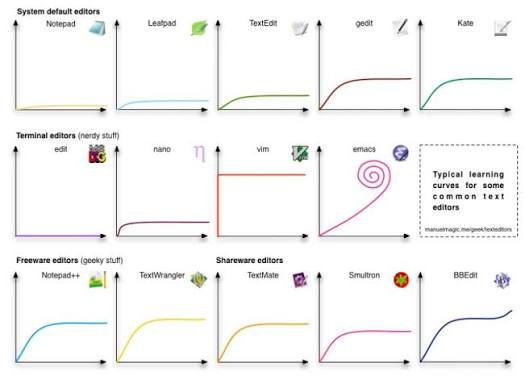
Sometimes the right tool is uncomfortable. It takes time before it pays off but in the long run it is worth it. Choosing the lazy path was allways the problem. Some will say it is hard to argue for learning Neovim or Emacs today. Fair, but then why learn Linux or containers at all, when the solution is presented to you anyway? Why grow when you can take the easy pill and have an answer right away? Why work out? Because the why and the how matter. Use the agent, then understand what it gave you, and grow with your tools instead of being replaced by them.